February 1981: New Zealand versus Australia. New Zealand needed just 6 runs to win the match and there was just one ball remaining. It could have been any match, between any two teams. But it was a match that people would not forget, years later. A match that would make critics sit up and stare disbelievingly. Trevor Chappell was bowling that crucial last over. Just before the run up, his captain has a word with him. Decisions are made. The fielders get ready, tense. The batsman takes his stance, nervous, preparing himself for that last big haul. Trevor runs in and in one of the most astonishing moments in the history of cricket, bowls an underarm delivery. The first-ever.
His captain – the man who had made that decision and had commanded him to bowl the last ball in the manner in which he did – was Greg Chappell, one of the finest batsmen Australia had seen.
Chappell, for his time, was a player possessing near-perfect batting techniques and was a delightful slip fielder. But his greatest weapon was and still is, his way of taking bold decisions and wholly relying on his convictions. It is this quality that made him the cricketer he was and more importantly, the coach that he is.
February 1981 was just one of the many decisions Greg Chappell took, indicating very important aspects about him. He was a bold decision-maker, he was a postive thinker, he stuck to his convictions, broke conventions and was highly innovative and most importantly knew the rules of the game. By telling his brother to bowl underarm, Chappell in no way breached the rules. But nevertheless, it showed a lack of sportsmanship on his part. The brothers may have expressed their embarrassment over this incident later. But Australia had won that match, and that was probably running in Chappell’s head. Chappell, furthermore, was part of the Packer team – a team that broke old conventions and made new boundaries.
It is this spirit that makes Greg Chappell work as the coach of the present Indian team. It has not been long since he took over as coach of the team and already significant incidents have occurred, recreating that image of 1981 – the bold decision maker.
The most prominent call that he made was very obviously the decision to drop Ganguly – the then captain of the side. Such things were never heard of Indian cricket. How could you drop a captain? But Chappell had made that decision and stuck to it. By this, he was indicating that in this profession there were going to be no sentiments involved. The team had to do well and it did not need any liabilities. That was the bold message he sent out.
Since then, he regularly made changes in every aspect that he was dealing with as a coach. He intoduced new and innovative training methods in batting, bowling and fielding. One that comes first to mind is his innovations in the nets. He would constantly watch over the nets sessions and as soon as the batsman had hit, would shout out a number – indicating the number of runs he had to take.
Imagine sending Pathan out to open an innings. That is what he did against Sri Lanka in the Test Series. And he repeated that with Yuvraj. It was a treat to watch the reaction of the fans in the stands when a young Pathan came striding out (but India was batting) all padded up. That is another streak that is distinctly Chappell – always throwing surprises and keep the opposition thinking. His actions hence have always projected the idea that he wanted the team to carry an attitude that said that they desired ‘to win’ and not ‘avoid defeat’.
He did not stop here. Pakistan Series – Chappell instructs Dravid to go out with 5 bowlers. This is again a novel move. Inspite of the fact that the batting might get weakened he goes ahead with his convictions, pushing five bowlers into the team.
And there’s more to come. Unquestionably, it is a man like Greg Chappell who makes cricket the game that it is. Through his decisions he has made the audience enraged and at the same time be amazed of the kind of cricketing mind he posseses. Cricket, for Chappell is just an elastic that he can stretch, pull, mould amd remodel to suit his ways and his temperament.
Cricket may and may not need thinkers like him. But he sure makes everyone guessing – what next?
28 Jan 2006


16 Jan 2006
Guntur - the memories
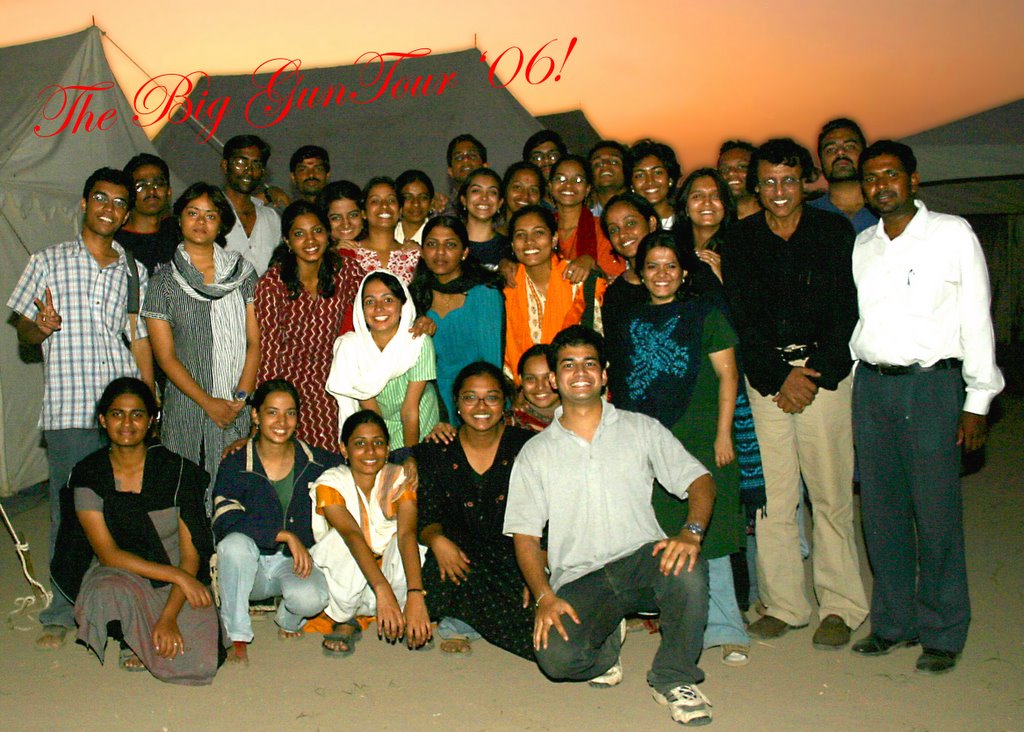
My face made it to the papers. Captured during a discussion with the collector of Guntur (Andhra Pradesh). Guntur - one of the places chosen for our covering deprivation course. Asian College of Journalism is the only college in India that has a Covering Deprivation course in its syllabus. I was one of the 30 students, trying to make something out of our trip to Guntur. For me, this was more than just a part of the course that I had to complete in order to get my degree – my passport to professional journalism (whatever that means).
Apart from making me realise how lucky I was, Guntur gave me many moments to cherish and remember, cry and laugh over, think deeply about, capture and keep…
* * *
Soujanya. An 11-year old girl, she carries a tin of ladoos instead of books, hands clutching the little money that she gets instead of a pencil. Soujanya. Her feet bearing the mark of her labour… We met her during our initial days selling ladoos at the quarry. She did not want to join a school and learn to be able to read and write like the other kids. When we spoke to her she was pretty sure that her life revolved only around the quarry and ladoos. Few days later, we made a stop at a school-cum-orphanage and came to know that they were getting another child to join the others – Soujanya. I experienced a sense of satisfaction, relief, a tinge of excitement, but not before a wave of unexpectedness and surprise. One of my friends, Pia, had met the people of this school, telling them about Soujanya and had urged them to take her in. We went back to the quarry and there she was, holding the tin for the last time… hopefully… I sat next to her and tried to converse using the few words of Telugu that I had managed to pick up. She giggled initially at my lack of knowledge of her language, but we were able to understand each other. She then presented us (Rads, Pav, Yogi, Max and me) with a flower bouquet. And I still have it with me in my book…
* * *
From Guntur, where we had a brief meeting with the Joint Collector, we went to Vinukonda – our base camp. We were hardly ever at our lodge, except during the nights of course. We would set out every morning in our jeeps, lugging arou
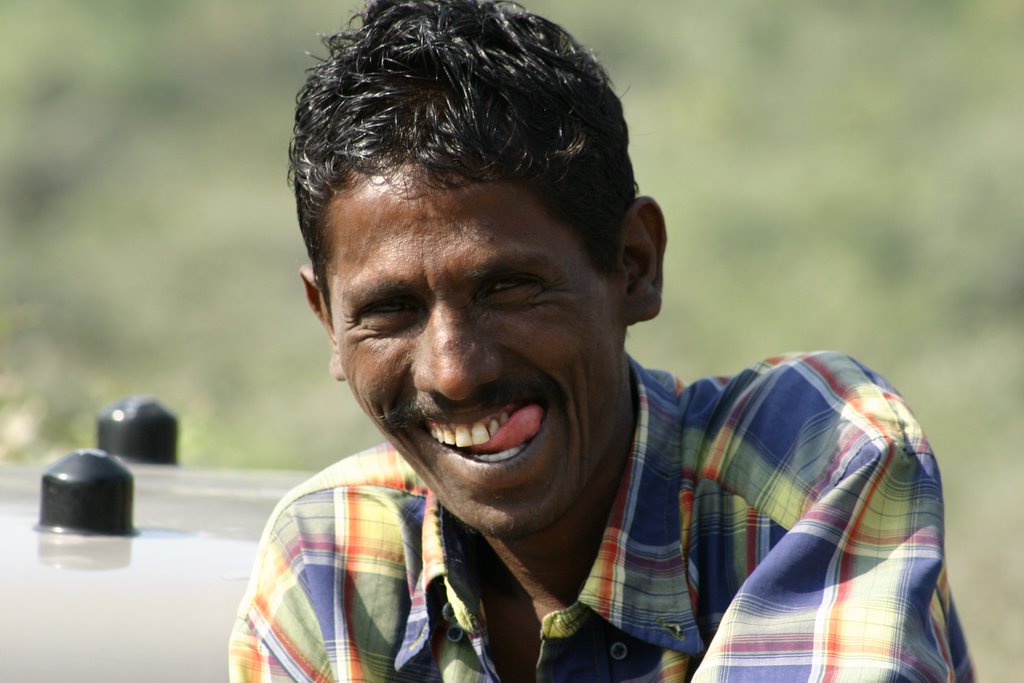 nd our video camera and tripod and return hours after darkness took over. I got so used to that system that I kind of miss the rush of it all now. We always made sure that we somehow got to travel in this one particular jeep because we felt (especially Max), that we bonded with the driver. He had never spoken much to us, probably because we didn’t speak the same language. And still, we bonded… As soon as the jeep revved, he would switch on the tape player and instantly the jeep would throb with Telugu beats. And we enjoyed every bit of it. I did not understand the language. But I simply loved those moments, traveling with a mission with the beats and the rhythm taking us there. I remember our first day in the jeep. He had not used the tape player at all and after quite a long time, we were beginning to get bored of the silence. So we had begun singing! Yogi and I were doing the seconds and Max, using the camera bag as the drums, provided the beats. I really do not know how our driver put up with us that day! Maybe that’s why the tape began playing and never stopped since then…
* * *
After hours of debates, we decided that we would target the education in these areas. I had researched a bit before leaving and quite obviously found that this aspect highly troubled me. So we went about visiting schools in the different mandals and interviewing the mandal officials, trying to gather as much information as we could. There were no colleges in most of the mandals. Bollapalli was by far the most backward mandal with a literacy rate of barely 33%. We met many students and teachers there. The easy way out was to get one of the Telugu speakers to help out. But I was determined to try and converse with the students there. On one such day, we didn’t return to our base camp and chose to stay back at this town called Durgi, in an ashram. We spent most of our time in the terrace there, because it was much quieter. It was hard for me to believe that I was in a place entrenched in naxalism. The huddled conversations, the chill breeze, the memories, the moon, Wikham (Yogi’s man) shooting the moon oblivious to everything around him, the bhajans, Max sleeping… it seemed like we were in some dream. The tensions, the fear was not there. Yet t
 here was an undercurrent. And it was then that nishat sir came up, pulling in a boy. He called Rads and me and said that this boy, Cheenu, had come looking for us. The boy looked up and gave a shy smile. It was considerably dark and I could not catch his features. From what sir told us, Cheenu had seen us in one of the schools. Wanting to meet us, he had enquired around and had reached the ashram. On one hand this thought scared me (we had so easily been traced). But on hearing this, a few of my classmates sitting around us, appreciated the fact that we had been able to reach out to him, prompting him to come to us. Yes. I did feel very nice. I did feel nice to have been able to create some impact (little it may be). And we did talk. Pav was fluent in Telugu and we spoke to him about his school, his dreams, his parents, his society, his life… then very carefully tip-toed into the realm that we really wanted to venture – naxalism. We skirted around, cautious all the while. Lunged a bit, then withdrew, kept repeating before we were able to get into a good rhythm. And it amazed me. How naxalism affected every soul here, young and old...
* * *

Max slept in every mandal! Wherever we went there was a stop, initially for 15 min and later extended ones to give us more time to take the shots and talk to the people in the villages. Max, the big guy that he is, got stares from every quarter. In one of the towns, Durgi, one guy went to the extent of asking whether he was a nawab! That was probably the last straw for the rest of us. From that day on, Max went around using Pav’s dupatta making a turban out of it (like the ones sheiks wear) proclaiming his authority as the ultimate nawab!
* * *
An encounter. A dead body. A naxalite. These were the first images that hit us as soon as we landed in Vinukonda. Jayraj had enough contacts to ensure that the body would not be removed until we had a look at it. I really could not say if that was a good thing or a bad thing. But honestly, the days of moving away, not getting close enough to things that would alarm us were gone. At least for us. We were journalists and it was more important for broadcast journalists to get right there. It was Amanda Harper, a BBC journalist who had come down to teach us a semester, who made me realise that it was our job to get there up close because no one else could. We were the journalists, the people’s link. However, I could not ignore the sadism that had seeped in. Here we were, students of journalism, the first journalists ever to step into these areas and we were excited. Excited to see a dead body. A dead naxal. Frankly, I do not know what to make of that. I still have the footage…
* * *
 ‘I am breakfast Puri’. That is what I ended up saying at one particular restaurant and from then on, it stuck. But it didn’t stop here. I was rechristened several times during our trip. So were a few others. It was like we had lived different lives there and we had to have different identities, different names. And it was mostly related to food. We think when we are eating I guess. Pav was ‘Mirchi Bajji’, Max was the nawab (who ate a lot so we could not really name him), Rads was the ‘Goodie Bag’ (she had the yummy things from home), Dhara was the ‘Alam Chutney’. Many others went nameless and we do feel a sense of regret. But life moves on. Even after returning home, we did not forget our alter IDs. I’m still breakfast puri, Pav is still Mirchi Bajji, , Rads is still the Goodie Bag and Dhara is still the Alam Chutney, Max is no longer the nawab (we absolutely refused to boost his ego any more)...
7 Jan 2006
Can the Raja be the Mantri?!
How is it like, when instead of leading the team, like you had so often before, you are being led? What is it like to work under someone, whose position you had once been in? Do the equations remain the same? Does everything add up to how it was before?
In a rather stormy and dramatic turn of events, Sourav Ganguly, the captain of the Indian cricket team, was shown the door by a relatively new coach – Greg Chappel. After traversing the rough seas henceforth, there seemed to be some relief when Ganguly, the ex-captain was brought back very briefly. Not as a captain, but as a player, in a side led by Dravid.
Here is a potentially volatile scenario, where an ex-captain is playing under another captain. This has happened a lot of times in Indian cricket before. Nobody can forget the times when Kapil and Gavaskar shared grounds. A little later, Ganguly and Tendulkar, Ganguly and Azhar and now Dravid and Ganguly. Was Greg correct in excluding Ganguly completely and ushering Dravid in as the new captain? The ex-captain and captain playing together – what significance does this have on cricket?
There is so much of psychology involved in this state. As the popular adage goes, cricket is more of a mind game than a physical one. Battles were fought and won, not because army A was physical stronger and more powerful than army B, but because they overpowered the opposition by wit and possessed the power to think them out. The Trojan horse was a product of the mind and not the carpenters who worked day and night to build that horse that brought them victory.
In such a situation, it is fair to say that you will in no way do something to show that another person is in many ways better than you. It is plain human tendency. This always plays in the mind of an ex-captain, playing under another captain. The effort that he used to give earlier would not be there at all. Every cricketer dreams of making it to the test team. Every test cricketer dreams of becoming the captain. That motivates them to perform and play. But for an ex-captain that motivation does not have a place anymore.
Sadly, statistics and individual glory has become more important than the team. It was always more important than the team. It cannot be proved that the ex-captain in the side does not play hundred percent anymore in order to make the team win. But truth is this notion is always playing in his head. There is furthermore, that sense of competition that may arise between the captain and the ex-captain. And most certainly this kind of tension transgresses into the dressing room too.
Look at (arguably) the best cricketing nation in the world. Australian selectors have always made sure that an ex-captain does not work under a captain. Never. There might have been captains for a series or a match. But never have such tensions been enforced upon the team. Right from Richie Benaud, Bill Lawry, Ian Chappel, Greg Chappel, Kim Hughes, Border, Mark Taylor, Steve Waugh, Gilchrist and now Ricky Ponting.
Their policies are very simple. Make the team members feel comfortable with each other. This policy of giving one captain his full run and then stepping down to give the successor the captain’s cap, has a lot of advantages. First of all, the captain and the team members (for that matter) do not live in fear of being thrown out the next minute. They know that they would be given a fair chance to prove their mettle. This in turn enables them to take bold decisions. Steve Waugh, for instance enforced a follow-on while playing against the Indians in the Kolkatta test match – something that Australians never do.
Since there is no threat of being dropped out of the captain’s seat, there is a percolation of knowledge, wherein the present captain shares all that he has learnt ( as captain) with the future captain. Therefore there is a relatively mature head taking his place, ensuring that there is no break in the momentum of the team.
Australians lost the Ashes. If India had been in that situation, the odds that the captain would have been dropped, are a 100 to none! The clear message a selection board gives the team in such a set-up is that the captain is as good as the team. If the team does not perform well, it is not the captain’s fault. So ultimately, the team benefits as a whole.
It is probably with this in mind that Greg Chappel did what he had to. He most certainly perceived the situation using this yard stick. The issue could have been less pleasant, but at this point no one can be blamed because the selection policy is such that cricketers are forced to feel insecure. Instead of looking forward, Indian captains are forced to look over their shoulders.
In a rather stormy and dramatic turn of events, Sourav Ganguly, the captain of the Indian cricket team, was shown the door by a relatively new coach – Greg Chappel. After traversing the rough seas henceforth, there seemed to be some relief when Ganguly, the ex-captain was brought back very briefly. Not as a captain, but as a player, in a side led by Dravid.
Here is a potentially volatile scenario, where an ex-captain is playing under another captain. This has happened a lot of times in Indian cricket before. Nobody can forget the times when Kapil and Gavaskar shared grounds. A little later, Ganguly and Tendulkar, Ganguly and Azhar and now Dravid and Ganguly. Was Greg correct in excluding Ganguly completely and ushering Dravid in as the new captain? The ex-captain and captain playing together – what significance does this have on cricket?
There is so much of psychology involved in this state. As the popular adage goes, cricket is more of a mind game than a physical one. Battles were fought and won, not because army A was physical stronger and more powerful than army B, but because they overpowered the opposition by wit and possessed the power to think them out. The Trojan horse was a product of the mind and not the carpenters who worked day and night to build that horse that brought them victory.
In such a situation, it is fair to say that you will in no way do something to show that another person is in many ways better than you. It is plain human tendency. This always plays in the mind of an ex-captain, playing under another captain. The effort that he used to give earlier would not be there at all. Every cricketer dreams of making it to the test team. Every test cricketer dreams of becoming the captain. That motivates them to perform and play. But for an ex-captain that motivation does not have a place anymore.
Sadly, statistics and individual glory has become more important than the team. It was always more important than the team. It cannot be proved that the ex-captain in the side does not play hundred percent anymore in order to make the team win. But truth is this notion is always playing in his head. There is furthermore, that sense of competition that may arise between the captain and the ex-captain. And most certainly this kind of tension transgresses into the dressing room too.
Look at (arguably) the best cricketing nation in the world. Australian selectors have always made sure that an ex-captain does not work under a captain. Never. There might have been captains for a series or a match. But never have such tensions been enforced upon the team. Right from Richie Benaud, Bill Lawry, Ian Chappel, Greg Chappel, Kim Hughes, Border, Mark Taylor, Steve Waugh, Gilchrist and now Ricky Ponting.
Their policies are very simple. Make the team members feel comfortable with each other. This policy of giving one captain his full run and then stepping down to give the successor the captain’s cap, has a lot of advantages. First of all, the captain and the team members (for that matter) do not live in fear of being thrown out the next minute. They know that they would be given a fair chance to prove their mettle. This in turn enables them to take bold decisions. Steve Waugh, for instance enforced a follow-on while playing against the Indians in the Kolkatta test match – something that Australians never do.
Since there is no threat of being dropped out of the captain’s seat, there is a percolation of knowledge, wherein the present captain shares all that he has learnt ( as captain) with the future captain. Therefore there is a relatively mature head taking his place, ensuring that there is no break in the momentum of the team.
Australians lost the Ashes. If India had been in that situation, the odds that the captain would have been dropped, are a 100 to none! The clear message a selection board gives the team in such a set-up is that the captain is as good as the team. If the team does not perform well, it is not the captain’s fault. So ultimately, the team benefits as a whole.
It is probably with this in mind that Greg Chappel did what he had to. He most certainly perceived the situation using this yard stick. The issue could have been less pleasant, but at this point no one can be blamed because the selection policy is such that cricketers are forced to feel insecure. Instead of looking forward, Indian captains are forced to look over their shoulders.
28 Nov 2005
Love thy Job
So I made the cover of the Metroving page of the New Media website Digantik ;)
I have to thank Mangala (for taking the pic and more importantly) highlighting the difficulties that journalists undergo in transport.
But don't get me wrong. I am in no way complaining because this is what I love to do. Grab a requisition, write it and get it signed by the instructor, grab the video cameras and the tripod, check if everything is in order, cue the tape, record a blank, pack it all and get out on the road, haggle with the ever-persevering auto drivers, reach destination, shoot the story and all the while white-balance each shot (thanks Amanda :)), catch a rick, work on the script while your on the way, write out the link and the headline, get out at college, sign out the camera (or face the wrath of Solanki sir), get into an edit room (if there is one that's free), digitise the tape and start editing...
I love it all. Who am I kidding! It does get tiring. But that is all part of the 'package'
P.S - the editing procedure would probably take up another post ;)
I have to thank Mangala (for taking the pic and more importantly) highlighting the difficulties that journalists undergo in transport.
But don't get me wrong. I am in no way complaining because this is what I love to do. Grab a requisition, write it and get it signed by the instructor, grab the video cameras and the tripod, check if everything is in order, cue the tape, record a blank, pack it all and get out on the road, haggle with the ever-persevering auto drivers, reach destination, shoot the story and all the while white-balance each shot (thanks Amanda :)), catch a rick, work on the script while your on the way, write out the link and the headline, get out at college, sign out the camera (or face the wrath of Solanki sir), get into an edit room (if there is one that's free), digitise the tape and start editing...
I love it all. Who am I kidding! It does get tiring. But that is all part of the 'package'
P.S - the editing procedure would probably take up another post ;)
First Term Nostalgia
The first term in college is where we were all together - the print, the broadcast and the new media. We produced our own show, designed our own website, presented seminars. We did a bunch of things together. I would never forget the day before our Key Issues presentation. We stayed in college working on the power point presenation, loading the pictures and working out our points. I was pushedout at midnight because I was one of the speakers. I will never fail to thank Ridhi, Ruchi and Rashmi, who satyed in college till 5:00 the next morning and worked on the presentation. Andwe did a great job. Our broadcast show was a few laughs but at the end of it, we made sure we learned a lot and had fun too.

That is a picture of our group at the end of the show. All smiles.
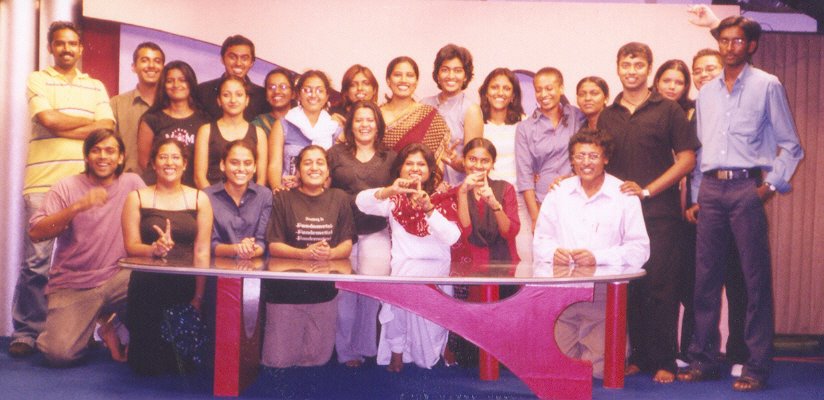
That is a picture of our group at the end of the show. All smiles.
12 Nov 2005
main zorro banna chahta hoon!
Want to watch a Bollywood movie in English?? No no. Not dubbed at all! This one is for real and it won't take you much at all. Just head to Satyam and buy the tickets for the 'Legend of Paaro'..oops.. Zorro. Trust me. If you ever wished to see the heroes of the past return; if you ever wished to see a wounded Bachan clamouring the temple bell and hanging onto it for dear life crying out - "ma! mein aa gaya ma!";if you want to see Rajnikanth's (not only the heroes of the past) gravity-defying acts, then you have simply got to watch the 'Legend of Zorro'!
For those of you who did not watch the prequel, let me brief you on the story so far. The hero,(played by Amitabh Banderas)is a Lawaris and a petty thief in Spain, until he is completely transformed into Zorro. He also has a horse that always disobeys his commands. But the good thing about the horse is that it was trained by Rajnikanth himself, who helped it master the art of defying gravity.
So Amitabh / Zorro rides out to save his home town and in the process also manages to fall in love with the heroine (played by Parveen Zeta Jones). The only way in which the movie deviates lies in the fact that there is no running-around-the-trees dance. Instead they do a bit of salsa. The Zorro saves the people and hence becomes a Shehensha. He marries his love and the two live happily ever after.
Cut to the sequel. The Zorro now has a family. He, his wife and his son (played by Dharmender Junior), are living away from the town. Junior does not know that hs father is the great Zorro that he has always admired. The Zorro is meanwhile a house-hold name. everyone respects and loves him. But the wife (parveen zeta jones) feels that Zorro is neglecting his family. So she announces to her husband that they should separate. Furthermore, his son thinks he is a softy and that he cannot even throw a towel (let alone a punch)! he even goes out to show his father how to fight the goons.
The Zorro is hurt and depressed. So he becomes a Sharabi. What will happen to the home town and the people. Will Zorro return and save the day?? Will the family get back together and live happily ever after?? Find out what happens in... the 'Legend of Paaro'
For those of you who did not watch the prequel, let me brief you on the story so far. The hero,(played by Amitabh Banderas)is a Lawaris and a petty thief in Spain, until he is completely transformed into Zorro. He also has a horse that always disobeys his commands. But the good thing about the horse is that it was trained by Rajnikanth himself, who helped it master the art of defying gravity.
So Amitabh / Zorro rides out to save his home town and in the process also manages to fall in love with the heroine (played by Parveen Zeta Jones). The only way in which the movie deviates lies in the fact that there is no running-around-the-trees dance. Instead they do a bit of salsa. The Zorro saves the people and hence becomes a Shehensha. He marries his love and the two live happily ever after.
Cut to the sequel. The Zorro now has a family. He, his wife and his son (played by Dharmender Junior), are living away from the town. Junior does not know that hs father is the great Zorro that he has always admired. The Zorro is meanwhile a house-hold name. everyone respects and loves him. But the wife (parveen zeta jones) feels that Zorro is neglecting his family. So she announces to her husband that they should separate. Furthermore, his son thinks he is a softy and that he cannot even throw a towel (let alone a punch)! he even goes out to show his father how to fight the goons.
The Zorro is hurt and depressed. So he becomes a Sharabi. What will happen to the home town and the people. Will Zorro return and save the day?? Will the family get back together and live happily ever after?? Find out what happens in... the 'Legend of Paaro'
3 Nov 2005
ALONG THE LINES
Where to draw the line? Is there a line at all? Do you at times feel that the line is so blurred that you do not know which side you are on?
Maybe I should begin by telling you what sparked this off. I am a broadcast student at the Asian College of Journalism. But I really cannot call myself a student because I am standing somewhere in between a trainee and a journalist. Every day passes with my having gone one step closer (in a seemingly endless flight of stairs) to becoming a journalist. And it was one of the many seminars held at college that made me think along these ‘lines’.
A journalist has so much power. But it would be all too well not to get heady with such power because as the old adage goes, 'with power comes responsibility'. More than anything, journalists need to be sensitive and reactive to the things around them. The litmus paper immediately tells you whether you are dealing with acid or alkaline. Journalists, according to me, are like the litmus paper.
Media over the years has begun to enter areas and spaces it never had before. We are in a sense invading a lot of areas, opening up a whole new dimension to journalism.
On one hand there is this compelling urge to relay the truth. And on the other hand, the journalist may most definitely cross the line and encroach upon someone’s private space. How far can you go before there is this feeling that you have stepped into another’s territory, rather forced your way into the subject’s space, in order to get your story?
I have treaded into this field knowing all the challenges that are going to come my way. And it is (in a sense) this thought that fuels me. It is not just about being a journalist, because I am almost sure that quite a few can. It is about being a journalist and following the principles that you have set for yourself. And let’s face it – in journalism (or any other profession for that matter) ethics are extremely important. It is not about doing the job. It’s about doing a thorough job but being sensitive all the while.
I admit it is not at all easy to know where the line is and sometimes it might get blurred. But journalists need to consciously make an effort because it is ultimately your call - where is your line drawn? The acid has to be identified as the acid and not alkaline and vice versa.
Maybe I should begin by telling you what sparked this off. I am a broadcast student at the Asian College of Journalism. But I really cannot call myself a student because I am standing somewhere in between a trainee and a journalist. Every day passes with my having gone one step closer (in a seemingly endless flight of stairs) to becoming a journalist. And it was one of the many seminars held at college that made me think along these ‘lines’.
A journalist has so much power. But it would be all too well not to get heady with such power because as the old adage goes, 'with power comes responsibility'. More than anything, journalists need to be sensitive and reactive to the things around them. The litmus paper immediately tells you whether you are dealing with acid or alkaline. Journalists, according to me, are like the litmus paper.
Media over the years has begun to enter areas and spaces it never had before. We are in a sense invading a lot of areas, opening up a whole new dimension to journalism.
On one hand there is this compelling urge to relay the truth. And on the other hand, the journalist may most definitely cross the line and encroach upon someone’s private space. How far can you go before there is this feeling that you have stepped into another’s territory, rather forced your way into the subject’s space, in order to get your story?
I have treaded into this field knowing all the challenges that are going to come my way. And it is (in a sense) this thought that fuels me. It is not just about being a journalist, because I am almost sure that quite a few can. It is about being a journalist and following the principles that you have set for yourself. And let’s face it – in journalism (or any other profession for that matter) ethics are extremely important. It is not about doing the job. It’s about doing a thorough job but being sensitive all the while.
I admit it is not at all easy to know where the line is and sometimes it might get blurred. But journalists need to consciously make an effort because it is ultimately your call - where is your line drawn? The acid has to be identified as the acid and not alkaline and vice versa.
20 Oct 2005
NO MATCH!
The greatest players in the world have come together to battle with the unrivaled team in the world. Imagine seeing the best bowlers spinning or seaming the ball and the most outstanding batsmen dotting the ground with their classic photo-framing shots! Nothing can ‘match’ this sight, right?..... Wrong!
If anything at all, the Super Series so far, stands proof to the fact that there is so much more to the game than players. It is not about the best pacer and the best pinch-hitter and the best wicket-keeper coming together. Frankly and quite obviously, it’s about a team. Now, I am not saying that Australia would have won the matches anyway. No. What I am saying is that even the most average players up against the paramount Australians could defeat them!(unbelievable as it may sound).
It happened in the 1999 World Cup, where Bangladesh, a team little known (till then at least) beat the mighty (at that time) Pakistanis. Kenya did it when they reached the semi-finals of the World Cup in 2003.
The fact is that players have become bigger than a team. In the early days, Don Bradman was a genius with an average of 99.94. HE was a true genius. Today, superlative terms are used so loosely, that even a Dhoni (of one-match brilliance) becomes a ‘master blaster’. Truth is, even 11 of the finest players cannot beat Australia (or any other team), if they cannot work together as a team.
But I really cannot cast aspersions on a team that has just assembled and are (most) probably groping about even now because team work does not seem to be on the top of the list in any team for that matter.
A few days ago, I had an argument with my friends regarding this very lack of spirit. From what I have seen and read so far, I have come to believe that the colonial impact of individualism and individual glory has not entirely been effaced. Not surprisingly, traces of the Raj linger even today, on the cricket fields.
Picture this – the Indian team has lost 3 or 4 wickets and Tendulkar comes out to bat (he is batting at number 5 for some weird reason). There is a set batsman in Dravid, at the score of 70, at the other end. Tendulkar does not seem to be getting his shots as he has already faced two overs with his score still at 0. A run-out situation occurs and Tendulkar is faced with a choice. If he runs back to his end, he is saved. But a set batsman goes back to the pavilion. If he runs to the other end he will very obviously get out.
Hmm… so what do you think he should do? The answer will arguably determine what is bigger….. The player or the game itself.
If anything at all, the Super Series so far, stands proof to the fact that there is so much more to the game than players. It is not about the best pacer and the best pinch-hitter and the best wicket-keeper coming together. Frankly and quite obviously, it’s about a team. Now, I am not saying that Australia would have won the matches anyway. No. What I am saying is that even the most average players up against the paramount Australians could defeat them!(unbelievable as it may sound).
It happened in the 1999 World Cup, where Bangladesh, a team little known (till then at least) beat the mighty (at that time) Pakistanis. Kenya did it when they reached the semi-finals of the World Cup in 2003.
The fact is that players have become bigger than a team. In the early days, Don Bradman was a genius with an average of 99.94. HE was a true genius. Today, superlative terms are used so loosely, that even a Dhoni (of one-match brilliance) becomes a ‘master blaster’. Truth is, even 11 of the finest players cannot beat Australia (or any other team), if they cannot work together as a team.
But I really cannot cast aspersions on a team that has just assembled and are (most) probably groping about even now because team work does not seem to be on the top of the list in any team for that matter.
A few days ago, I had an argument with my friends regarding this very lack of spirit. From what I have seen and read so far, I have come to believe that the colonial impact of individualism and individual glory has not entirely been effaced. Not surprisingly, traces of the Raj linger even today, on the cricket fields.
Picture this – the Indian team has lost 3 or 4 wickets and Tendulkar comes out to bat (he is batting at number 5 for some weird reason). There is a set batsman in Dravid, at the score of 70, at the other end. Tendulkar does not seem to be getting his shots as he has already faced two overs with his score still at 0. A run-out situation occurs and Tendulkar is faced with a choice. If he runs back to his end, he is saved. But a set batsman goes back to the pavilion. If he runs to the other end he will very obviously get out.
Hmm… so what do you think he should do? The answer will arguably determine what is bigger….. The player or the game itself.
18 Oct 2005
Mangal Pandey... An Accidental Hero?
Was Mangal Pandey an accidental hero? This question has been much debated after the release of the Ketan Mehta movie. With the release, what ‘Mangal Pandey: The Rising’ did was open various arguments delineating the role of this martyr. Was he the hero that ‘The Rising’ showed him to be? Did his lone act of brashness actually result in the mutiny that followed?
On 29 March 1857, Pandey came out and challenged the British, even as he called out to his comrades and fellow sepoys. He attacked and injured his superior and wounded an adjutant with a sword. As the British, reacting to this sudden outburst closed in on him, Pandey tried to shoot himself but failed and was hanged for his act of ‘rebellion’.
After Aamir Khan’s portrayal of Pandey, a lot of discussion has risen as to whether Pandey was the hero that the Khan portrayed? Wasn't he intoxicated and in a frenzy when he decided to attack the British?
Rudrangshu Mukherjee has debated Mangal Pandey’s role as the instigator of the revolt in his book ‘Mangal Pandey: Brave Martyr or Accidental Hero’. He puts forth a series of arguments supporting his statement of Pandey being an accidental hero. He vehemently says, “Nationalism creates its own myths – Mangal Pandey is part of that imagination of histories.”
The point that supports this claim is that not much has been written on Pandey. He probably figured in a few lines in the pages of Indian history and the struggle for independence. But then again, it must be noted that this argument relies heavily on the British records of the 1857 rebellion. The British underplayed the event as just a sepoy mutiny and did not attach any importance to Mangal Pandey.
Mukherjee goes on to say that history had recorded nothing about him that could be used to reconstruct an individual and locate his springs of action. It is true that there have been no documents to show Pandey’s thought process or his reactions to the introduction of the cartridge greased with animal fat. To reiterate - Mukherjee’s argument cannot be acknowledged precisely for the same reason – that there has been nothing written about him.
The main argument that Mukherjee makes is that Pandey was intoxicated with bhang when he decided to revolt. There was no record of his life except his one act of doubtful valour under the influence of bhang. But drinking was not something that was uncommon in the army. Every sepoy drank and not everyone ran out to nearly get killed after drinking.
Rudrangshu Mukherjee also says that “a rebellion is a collective will to overthrow a rebellious order. Pandey acted alone. He was a rebel without a rebellion.” He went on to say that Mangal Pandey meant nothing to the sepoys who raised the revolt in 1857. To hold his argument, Mukherjee cites the practically-unheard-of mutiny in Barrackpore itself 33 years before Mangal Pandey's action. Over 200 soldiers were killed, yet the first full-scale study of the 1824 mutiny in Barrackpore (which managed to spread only as far as Rungpore in Assam the year after) appeared only in 2003.
So, in effect there is a view that Mangal Pandey was an ordinary sepoy who, in a state of intoxication, committed a foolhardy act for which he was hanged and his infantry dismissed. He was just that – an accidental hero, a man who got lucky. But if that is the argument then one cannot say that Mahatma Gandhi, for instance, was an accidental hero just because he was kicked out of the train! Maybe the truth lies somewhere in between...
On 29 March 1857, Pandey came out and challenged the British, even as he called out to his comrades and fellow sepoys. He attacked and injured his superior and wounded an adjutant with a sword. As the British, reacting to this sudden outburst closed in on him, Pandey tried to shoot himself but failed and was hanged for his act of ‘rebellion’.
After Aamir Khan’s portrayal of Pandey, a lot of discussion has risen as to whether Pandey was the hero that the Khan portrayed? Wasn't he intoxicated and in a frenzy when he decided to attack the British?
Rudrangshu Mukherjee has debated Mangal Pandey’s role as the instigator of the revolt in his book ‘Mangal Pandey: Brave Martyr or Accidental Hero’. He puts forth a series of arguments supporting his statement of Pandey being an accidental hero. He vehemently says, “Nationalism creates its own myths – Mangal Pandey is part of that imagination of histories.”
The point that supports this claim is that not much has been written on Pandey. He probably figured in a few lines in the pages of Indian history and the struggle for independence. But then again, it must be noted that this argument relies heavily on the British records of the 1857 rebellion. The British underplayed the event as just a sepoy mutiny and did not attach any importance to Mangal Pandey.
Mukherjee goes on to say that history had recorded nothing about him that could be used to reconstruct an individual and locate his springs of action. It is true that there have been no documents to show Pandey’s thought process or his reactions to the introduction of the cartridge greased with animal fat. To reiterate - Mukherjee’s argument cannot be acknowledged precisely for the same reason – that there has been nothing written about him.
The main argument that Mukherjee makes is that Pandey was intoxicated with bhang when he decided to revolt. There was no record of his life except his one act of doubtful valour under the influence of bhang. But drinking was not something that was uncommon in the army. Every sepoy drank and not everyone ran out to nearly get killed after drinking.
Rudrangshu Mukherjee also says that “a rebellion is a collective will to overthrow a rebellious order. Pandey acted alone. He was a rebel without a rebellion.” He went on to say that Mangal Pandey meant nothing to the sepoys who raised the revolt in 1857. To hold his argument, Mukherjee cites the practically-unheard-of mutiny in Barrackpore itself 33 years before Mangal Pandey's action. Over 200 soldiers were killed, yet the first full-scale study of the 1824 mutiny in Barrackpore (which managed to spread only as far as Rungpore in Assam the year after) appeared only in 2003.
So, in effect there is a view that Mangal Pandey was an ordinary sepoy who, in a state of intoxication, committed a foolhardy act for which he was hanged and his infantry dismissed. He was just that – an accidental hero, a man who got lucky. But if that is the argument then one cannot say that Mahatma Gandhi, for instance, was an accidental hero just because he was kicked out of the train! Maybe the truth lies somewhere in between...
HERE... ALMOST
So I finally did it... Created my own blog. My space. Do not completely know why. But there were just some things that inspired me to.
I have always wanted to voice my opinions, always wanted to be heard. I can just sit over a cup of hot chocolate or even munch through wafers (don't know the connection) and go on contemplating various issues.
So blogdom... you finally got me and I'm going to be here for long...
I have always wanted to voice my opinions, always wanted to be heard. I can just sit over a cup of hot chocolate or even munch through wafers (don't know the connection) and go on contemplating various issues.
So blogdom... you finally got me and I'm going to be here for long...
Subscribe to:
Posts (Atom)